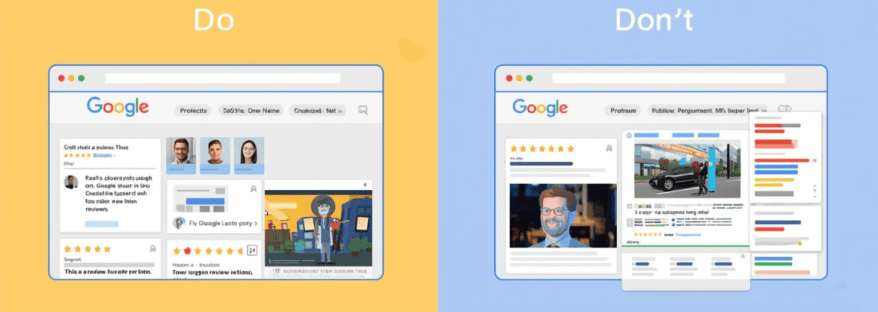
do's and dont's of adding google reviews
Reviews

The Do’s and Don’ts of Showcasing Google Reviews on Your Website

Today, customer reviews are one of the most effective ways to build trust, credibility, and social proof for your business. Google Reviews, in particular, influence potential customers before they buy a product, visit a store, or use a service.

When displayed correctly on your website, Google Reviews can boost engagement, improve your reputation, and increase conversions. However, mistakes in presenting them can make your site look unprofessional or spammy.

In this guide, we’ll cover the key do’s and don’ts for showcasing Google Reviews, along with practical tips to make your review section trustworthy and attractive.

Why Google Reviews Matter for Your Website?

Google Reviews are more than just star ratings—they are social proof that helps your visitors trust your business. Here’s why they matter:

  • Build Trust and Credibility: Genuine customer experiences give your business authenticity.
  • Improve Conversions: Displaying positive feedback can encourage potential customers to take action.
  • Boost SEO: Fresh user-generated content, like reviews, can help with search rankings, especially for local SEO.
  • Enhance Customer Engagement: Reviews can spark interest and interaction when highlighted creatively.

With the right approach, Google Reviews can act as both a marketing tool and a proof of quality for your products or services.


The Do’s of Showcasing Google Reviews

1. Do Display Recent Reviews

Highlighting the latest reviews ensures your site looks active and up-to-date. Visitors are more likely to trust recent feedback than reviews from years ago.

2. Do Use Widgets or Plugins

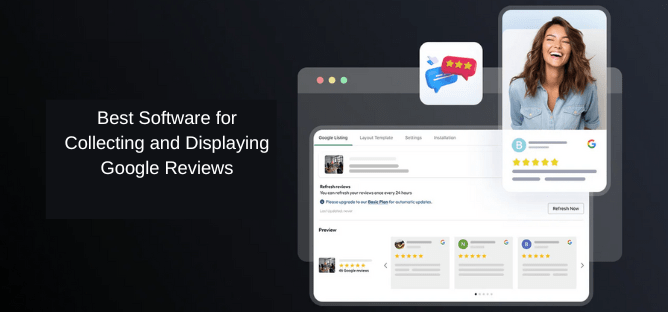
Use a Google Reviews widget or plugin to display reviews automatically. Tools like Taggbox, Elfsight, or Tagembed allow you to showcase reviews in attractive layouts without manually updating them.

3. Do Feature Reviews Strategically

Place reviews on pages where they matter most:

  • Homepage
  • Product or service pages
  • Pricing pages
  • Contact page or landing pages

Strategic placement ensures maximum visibility and impact.

4. Do Include Reviewer Details

Include the reviewer’s name, profile picture, rating, and date. It makes the reviews look authentic and builds trust with your audience.

5. Do Highlight Different Types of Reviews

Show a mix of reviews that cover different aspects: product quality, customer service, delivery speed, or overall experience. This gives a comprehensive view of your business.

6. Do Respond to Reviews Publicly

Responding to reviews shows that you care about customer feedback. A polite acknowledgment or solution increases credibility and encourages more reviews.

7. Do Keep the Design Clean and Consistent

Ensure the review section matches your website’s overall design. Avoid clutter or using too many different fonts and colors. A clean, consistent layout improves readability.


The Don’ts of Showcasing Google Reviews

1. Don’t Fake Reviews

Never create fake reviews to boost ratings. Google has strict policies against fake reviews, and visitors can usually tell when reviews aren’t genuine. This can damage your reputation and even lead to penalties.

2. Don’t Display Only 5-Star Reviews

Showing only perfect reviews may appear suspicious. A few balanced reviews, including constructive criticism, make your feedback section authentic and believable.

3. Don’t Overload the Page with Reviews

While it’s good to show multiple reviews, too many reviews can overwhelm visitors. Use a carousel, slider, or limit the number of reviews displayed per page for a cleaner look.

4. Don’t Ignore Negative Reviews

Negative reviews provide an opportunity to demonstrate professionalism. Ignoring them or deleting them can hurt your credibility. Respond politely and offer solutions instead.

5. Don’t Use Reviews Without Permission

If you’re quoting reviews from sources outside of Google, make sure you have permission or that it complies with copyright rules. Always credit the reviewer.

6. Don’t Forget Mobile Optimization

Many visitors will view your site on mobile devices. If your review section isn’t mobile-friendly, it may break the layout or be hard to read. Always test reviews on different screen sizes.

7. Don’t Place Reviews in Hard-to-Find Areas

Reviews should be visible and easy to find. Placing them at the bottom of the site without any prominence may reduce their impact. Use clear headings or sections like “What Our Customers Say.”


Tips for Effective Google Reviews Integration

To make your Google Reviews section more effective:

  1. Use Interactive Widgets – Carousels, sliders, or grids make reviews engaging.
  2. Filter High-Impact Reviews – Highlight reviews that cover key selling points or reflect your strengths.
  3. Combine with Other Social Proof – Include testimonials, case studies, or user-generated content alongside Google Reviews.
  4. Encourage New Reviews – Make it easy for customers to leave reviews on Google. You can provide links in emails or thank-you pages.
  5. Monitor Review Metrics – Track engagement with your reviews section: clicks, scrolls, and impressions to optimize layout and content.

Tools to Display Google Reviews

Some reliable tools to help showcase Google Reviews on your website include:

  • Taggbox – Collects reviews and allows customizable widgets.
  • Elfsight – Offers responsive and visually appealing review display options.
  • Tagembed – Integrates Google Reviews with website and social feeds.
  • WidgetPack – Simple solution to display reviews with minimal setup.

These tools save time, ensure automatic updates, and give your site a professional look.


Final Thoughts

Google Reviews are more than just ratings—they’re a powerful marketing tool. When showcased properly, they can improve trust, boost conversions, and enhance your online reputation.

Remember the do’s: use widgets, display recent reviews, respond publicly, keep the design clean, and highlight reviewer details.

Avoid the don’ts: don’t fake reviews, ignore negative feedback, overload the page, or neglect mobile optimization.

By following these best practices, your website can leverage Google Reviews as authentic social proof that drives engagement, builds trust, and grows your business.

Start today, and turn your customer feedback into a powerful marketing asset!

promote facebook page
Digital Marketing, facebook, facebook widget

How to Effectively Promote Your Facebook Page and Go Viral

Facebook remains one of the most powerful platforms for businesses, creators, and influencers seeking to connect with their audiences. With billions of active users worldwide, it provides an ideal space to share content, engage fans, and grow your brand. However, simply having a Facebook page isn’t enough. To succeed, you need actionable strategies to promote your Facebook page, make your content resonate, and maximize reach.

In this blog, we’ll explore practical tips, tools, and best practices to help you grow your audience, and use Facebook hashtags effectively.


Why Promoting Your Facebook Page Matters?

Many businesses underestimate the importance of actively promoting their Facebook page. A few posts here and there won’t build a loyal audience. Promotion is essential because it:

  • Builds Brand Awareness: The more people see your page, the more recognizable your brand becomes.
  • Encourages Engagement: Active promotion leads to more likes, shares, and comments.
  • Drives Traffic to Your Website: Facebook posts can guide followers to your blog, product pages, or landing pages.
  • Generates Leads and Sales: A well-promoted page can convert followers into paying customers.

Promotion doesn’t just grow numbers—it builds trust and authority in your niche.

Optimize Your Page for Maximum Impact

Before you start promoting, ensure your page is optimized for both users and search engines. A well-optimized page increases the likelihood that new visitors will hit the “Like” button.

  1. Complete Your Profile: Add a professional profile picture, cover photo, and business details.
  2. Craft a Clear About Section: Include your description, website link, and contact info.
  3. Use a Branded URL: A clean URL, such as facebook.com/yourbrand, is easy to remember.
  4. Enable Call-to-Action Buttons: Options like “Shop Now,” “Sign Up,” or “Contact Us” guide visitors effectively.

Once your page is fully optimized, you’re ready to attract followers and grow engagement.

Smart Ways to Promote Your Facebook Page

1. Cross-Promote on Other Channels

Sharing your Facebook page on your website, blog, email newsletters, and other social media accounts helps reach existing audiences who may not know you’re on Facebook. Cross-promotion is an easy, cost-effective way to increase visibility.

2. Collaborate with Influencers

Partnering with influencers in your niche can boost exposure. Influencers can share your content, tag your page, and help posts go viral on Facebook. The key is to collaborate with influencers whose followers match your target audience.

3. Use Facebook Ads Strategically

Paid promotion can accelerate growth. With Facebook Ads, you can:

  • Target specific demographics, locations, and interests.
  • Boost high-performing posts to reach more people.
  • Encourage page likes, website visits, or event responses.

Even a small ad budget can lead to significant growth when applied thoughtfully.

4. Engage Your Audience

Actively engage with followers by responding to comments, asking questions, and running polls. Interaction not only strengthens relationships but also boosts the visibility of your posts in others’ Facebook feed.

Optimize Your Facebook Feed for Engagement

Your Facebook feed is where followers interact with your content. To make the most of it:

1. Post Consistently

A consistent posting schedule keeps your audience engaged and expecting new content. Use a content calendar to plan posts in advance.

2. Mix Content Types

Different types of content resonate differently with your audience:

  • Text posts for quick updates
  • Images for visual appeal
  • Videos for storytelling
  • Polls or quizzes for engagement
  • Live sessions for real-time interaction

Videos and live sessions, in particular, are more likely to go viral on Facebook because of their higher engagement rates.

3. Tell Stories

Stories are memorable and relatable. Share behind-the-scenes content, customer testimonials, or team experiences to create an emotional connection with your audience.

4. Monitor Metrics

Track likes, shares, comments, and reach to identify what content works best. Adjust your strategy based on these insights to improve engagement.

Harness the Power of Facebook Hashtags

Facebook hashtags help categorize your content and make it discoverable by people who aren’t following your page.

  • Use hashtags relevant to your niche, like #MarketingTips or #HealthyLiving.
  • Combine popular hashtags with more specific ones to reach a targeted audience.
  • Limit your hashtags to 2–5 per post for optimal engagement—too many can look spammy.

When used strategically, hashtags increase visibility and can contribute to making your content go viral on Facebook.

Additional Tips to Boost Reach

  1. Host Giveaways and Contests: Encourage followers to like, comment, and share your posts for a chance to win.
  2. Feature User-Generated Content: Share content created by your fans to build community and trust.
  3. Post at Optimal Times: Analyze your audience insights to determine when followers are most active.
  4. Use Eye-Catching Visuals: Bright, high-quality images and videos attract more attention in the Facebook feed.
  5. Encourage Shares: Craft content that is informative, entertaining, or inspirational to encourage followers to share it with friends.

How to Measure the Success of Your Facebook Promotion

Tracking your efforts is key to improving your strategy. Focus on these metrics:

  • Page Likes and Follower Growth: Measures overall audience growth.
  • Engagement Rate: Includes likes, comments, and shares.
  • Reach and Impressions: Shows how many people saw your posts.
  • Click-Through Rate (CTR): Tracks clicks to your website or landing pages.

Regularly reviewing analytics allows you to refine your content, posting schedule, and promotional efforts.


Conclusion

Promoting your Facebook page effectively requires a mix of strategy, consistency, and creativity. By optimizing your page, leveraging your Facebook feed, using Facebook hashtags, and engaging your audience, you can increase visibility, build trust, and encourage interactions. When done right, these efforts can help your content go viral on Facebook, attracting new followers and growing your brand’s online presence.

Remember, the goal is not just to get likes but to foster a community of engaged, loyal followers who contribute to your brand’s long-term success. Start applying these strategies today and watch your Facebook page grow.

best-linkedin-widget-tools-.jpg
linkedin

Top 10 Best LinkedIn Widget Tools for Website Owners

With regards to the digital world in which we live today, it is now imperative for companies, entrepreneurs, and content creators to engage in professional networking and branding on LinkedIn. Integrating the LinkedIn Widget Tools into their websites enables users to showcase LinkedIn content, increase engagement, and strengthen credibility. These widgets allow website owners to effortlessly connect their professional presence with their online audience. This article discusses some of the best LinkedIn Widget Tools available for site owners.

Key Features to Look for in LinkedIn Widget Tools

According to many specialists for perfect choice of LinkedIn Widget Tools, it should be having important features: 

  • Easy Integration-Easy to mediate integration widgets need less coding knowledge. 
  • Customization-Ability to change the style, layout, and other features so that it matches the overall website. 
  • Mobile Responsiveness – Ensures a seamless experience across different devices.
  • Engagement-Action such as like, follow, and share LinkedIn content from the site. 
  • Analytics and Measure Performance: Understands what users do with the widget.

Top 10 LinkedIn Widget Tools for Website Owners

Find out the top 10 LinkedIn widget tools that you can use to easily embed LinkedIn features on your website and boost engagement.

1. Tagembed

Tagembed is another excellent LinkedIn Widget Tool that helps website owners display LinkedIn content effectively. It offers:

  • Real-time LinkedIn feed updates.
  • Highly customizable designs.
  • Multi-platform support along with LinkedIn integration.

2. Elfsight 

Elfsight offers a powerful LinkedIn Widget Tool that helps website owners showcase LinkedIn feeds, company pages, and profiles with ease. Features include:

  • Customizable display settings.
  • No coding required.
  • Auto-updating LinkedIn content.

3. Common Ninja 

Common Ninja provides a feature-rich LinkedIn Widget Tool designed for website owners looking to improve engagement. Key features include:

  • Stylish and customizable designs.
  • Easy embedding process.
  • Works across various website platforms.

4. Tagbox

Taggbox is a social media aggregator that offers a LinkedIn-specific widget. This LinkedIn Widget Tool allows website owners to display LinkedIn content dynamically. Features include:

  • Moderation tools for content control.
  • Real-time content updates.
  • Seamless integration with various CMS platforms.

5. EmbedSocial

EmbedSocial is a popular platform that provides a LinkedIn Widget Tool for website owners who want to showcase LinkedIn posts and interactions. Features include:

  • Automatically updates LinkedIn content on websites.
  • Customization options for branding.
  • Interactive and engaging design elements.

6. Flockle 

Flockler offers a social media aggregation tool that allows embedding LinkedIn content on websites. This LinkedIn Widget Tool helps in enhancing engagement through:

  • Displaying LinkedIn posts, articles, and videos.
  • Mobile-friendly designs.
  • Various layout options for better customization.

7. Juicer 

Juicer’s LinkedIn Widget Tool aggregates LinkedIn content and displays it on websites, making it an excellent choice for businesses and content creators. Features include:

  • Ability to pull LinkedIn posts into a social feed.
  • Customizable themes and layouts.
  • Integration with multiple social media platforms.

8. SociableKIT 

SociableKIT offers a dedicated LinkedIn Widget Tool that makes embedding LinkedIn company page posts effortless. Features include:

  • No coding required.
  • Customizable display options.
  • Smooth integration with various website builders.

9. Walls.io

Walls.io is a social wall platform that allows website owners to integrate LinkedIn content seamlessly. This LinkedIn Widget Tool offers:

  • Real-time content updates from LinkedIn.
  • Supports multiple social media sources.
  • Easy setup and customization.

10. Powr

Powr provides an easy-to-use LinkedIn Widget Tool that allows website owners to display LinkedIn posts, articles, and company updates. Features include:

  • Simple drag-and-drop functionality.
  • Multiple layout and display options.
  • Works with various website platforms.

How to Choose the Right LinkedIn Widget Tools for Your Website

Selecting the best LinkedIn Widget Tools for your website depends on several factors:

  • Budget – Free vs. premium widget options.
  • Ease of Use – No-code vs. coding-required widgets.
  • Website Compatibility – Ensure the widget works with your CMS (WordPress, Shopify, etc.).
  • Customization – Consider whether you need advanced styling and layout options.
  • Engagement Needs – If you require interactive features like likes and shares, choose accordingly.

Conclusion

Integrating LinkedIn Widget Tools into a website is a great way to enhance engagement, showcase professional credibility, and increase brand visibility. From LinkedIn’s official plugins to third-party solutions like Elfsight, Tagbox, and Tagembed, website owners have numerous options to choose from. By selecting the right LinkedIn Widget Tools, businesses and professionals can strengthen their LinkedIn presence and drive more interactions directly from their websites.

social media Facebook aggregator
facebook

Facebook Aggregators Explained: A Beginner’s Guide

For businesses, marketers, and content creators, Facebook content management can be very taxing. social media Facebook aggregator free simplify this process. By pooling posts, comments, and analytics from several sources, these aggregator tools allow one to save time, efficiently manage content, and elevate engagement strategies. If one is looking to increase Facebook Page followers, probe audience interactions, or monitor trends, Facebook aggregators can change the game.

What Are Facebook Aggregators?

A Facebook aggregators is a tool that facilitates the collection and organization of Facebook content from various pages, groups, or profiles. Rather than manually searching multiple sources, an aggregator collects all relevant content into a single dashboard. This would be useful for businesses monitoring brand mentions, content creators in search of ideas for Facebook posts, or marketers analyzing trends.

Some aggregators might even allow the automation of content curation, allowing the easy sharing of trending posts to keep the audience engaged. This is vital for anyone trying to increase followers on their Facebook page through consistent posts.

How Do Facebook Aggregators Work?

API connections are the modus operandi of most Facebook Aggregators to extract data from Facebook pages, groups, or user interactions. These tools search across the platform for keywords, hashtags, or specific pieces of user-generated content and display the collected information in an easy-to-read format. 

For example, a Facebook aggregator can provide insights into Facebook Hashtag Tracking by collecting and analyzing posts that relate to a brand, product, or issue for which hashtag engagement is being tracked. Such data helps with the identification of trending subjects that can be preparing to counter-program with the content strategy.

Benefits of Using Facebook Aggregators

1. Save Time and Effort

Page after page and group after group can be converted to a Facebook Aggregator into hours spent manually checking and cross-forming them all. It is flexible enough for social media managers who would want to schedule post timings while also needing a way to see how people would be engaging.

2. Discover Fresh Content Ideas

Ideas for Facebook posts can be hard to come by; however, those ideas are made easier with aggregators by showing trending topics, viral posts, and user-generated content that pertain to your niche. So your content will usually remain relevant and interactive.

3. Boost Engagement with Data-Driven Insights

Likewise, plenty of engagement is really important in developing a Facebook page. The Facebook Aggregators provide great insights for you to optimize content performance. Is there any engagement from the users through likes, comments, or shares? Then trial and error will help you figure out what types of posts your audience likes. you can join trending conversations and gain visibility. So with that in mind, you can create content that attracts more eyeballs and keeps your followers engaged.

4. Improve Page Engagement

When you know the kind of content that resonates with your audience, it is possible to use it for more likes, shares, and comments for your post. This will lead to better engagement while following the Facebook Page organically.

5. Embed Facebook Content on Your Website

You can have Facebook widgets from some aggregators for displaying Facebook feeds, reviews, posts, etc., on your website in real time, thus increasing audience engagement and prompting visitors to interact with your brand on Facebook.

6. Monitor Brand Reputation with Facebook Reviews

Aggregators are also keeping an eye on the Facebook reviews, thus helping businesses quickly respond to feedback from customers. The positive reviews can be showcased on websites, while one should be proactive to address any negative customer feedback.

Popular Facebook Aggregators to Consider

Some of the best-known aggregators help in creating a streamlined content management and engagement strategy.

  1. Tagbox– A social media aggregator for embedding live Facebook feeds on websites.
  2. Hootsuite– Enables you to schedule, track engagement, and monitor mentions for your posts.
  3. Sprout Social– Has in-depth analytics and hashtag tracking.
  4. Feed Them Social– This is a plugin that allows you to embed Facebook feeds, posts, and videos on your site.
  5. Tagembed– Gathers Facebook posts as a live feed displayed on websites. 

These instruments have made the content aggregation easy but feature-rich like embedding Facebook Reels, tracking hashtags, and showing real-time social proof using Facebook reviews.

How to Choose the Right Facebook Aggregator

When selecting a aggregator, consider the following factors:

1. Features and Functionality

Consider features like Facebook Hashtag Monitoring, Post Scheduling, Analytics, and Facebook Widgets for integration into Websites. Ensure the software fits your exact needs.

2. Ease of Use

A good aggregator should have an intuitive interface that simplifies material management. Beginners should choose the possibility of a user -friendly equipment with a minimum setup.

3. Pricing and Scalability

If you’re a small business or content creator, start with a free plan before investing in a premium tool. Ensure the aggregator can scale with your growing needs.

4. Integration with Other Platforms

Some aggregators support multiple social media platforms, allowing you to manage Facebook alongside Instagram, Twitter, and LinkedIn in one place.

Potential Challenges and Limitations

While Facebook Aggregators offer numerous benefits, they also come with some challenges:

  • Data Accuracy Issues – Some tools may not update in real-time, leading to outdated content displays.
  • Privacy and Compliance Concerns – Facebook’s API restrictions may limit data collection, affecting certain features.
  • Dependence on Third-Party Tools – Relying too much on aggregators can be risky if a tool discontinues service or changes its pricing structure.

Despite these challenges, the right aggregator can be an invaluable tool for content curation, engagement, and analytics.

Conclusion

In today’s fast-paced digital world, aggregators are essential for businesses, marketers, and content creators looking to streamline their social media strategy. From Facebook Hashtag Tracking to embedding Facebook Reels on websites, these tools provide valuable insights and automation that can help increase Facebook Page followers and improve engagement.

By choosing the right aggregator, you can simplify content management, track audience interactions, and enhance your online presence. Whether you’re monitoring Facebook reviews or looking for fresh Facebook post ideas, aggregators offer the perfect solution to optimize your strategy. Start exploring the best tools today and take your Facebook game to the next level!

Track Twitter Mentions
Social Media Marketing, Technology

Track Twitter Mentions: Strategies to Boost Customer Engagement

Social media platforms like Twitter have made it easy for businesses to keep their audience connected, create brand awareness, and add value to existing customers in this digital age. Twitter boasts over 396 million users from around the globe and serves as the perfect platform for businesses to engage their customers in real-time conversation while following trends by paying attention to customer needs. One of the best ways to engage with Twitter in a business marketing strategy would be tracking Twitter mentions. Knowing what people are saying about your brand will give you valuable insight into how to increase customer satisfaction and engagement within your business.

In this article, we will examine the importance of tracking mentions on Twitter, ways to discover new strategies for enhancing customer engagement, and tools that can keep you up to date with all Twitter activity.

Why Track Twitter Mentions?

One of the most integral aspects that make a successful social media strategy is tracking Twitter mentions. It fulfills the need to react when someone mentions the brand, as it will help you to get in touch with a customer, resolve his problem, or even thank them for following your work. These are a few reasons why tracking Twitter mentions would best serve your business:

  • Real-Time Feedback: Twitter is a fast-paced platform that provides real-time conversations. Tracking Twitter mentions lets you discover what customers have to say about your brand, products, or services. This allows you to quickly resolve issues and thus improve customer experience.
  • Build Relationships: Engaging users who mention your brand goes a long way in building a solid bond. Compliment, complaints, or question-answering indicates that you hold their input in high regard and that you want to serve them excellently.
  • Monitor Brand Reputation: Twitter mentions help you monitor a brand’s reputation. Amplify positive mentions and rectify negative ones before they escalate.
  • Identify Influencers: By tracking mentions on Twitter, you can identify influencers or advocates of the brand who are talking about your business. Collaborating with them will reach a large audience, increasing your credibility.
  • Stay Ahead of Trends: Twitter trends normally reflect what is happening across the world. Keeping an eye on mentions keeps you in the loop on what’s trending and allows you to shape your content strategy accordingly.

Strategies to Boost Customer Engagement by Tracking Twitter Mentions

Measuring Twitter mentions is the basis on which to develop strategies for encouraging customer engagement. Here are some ways to engage your customers more productively:

1. Respond Soon Enough to Mentions

In such instances, the wittiest response must be applied to the customer who is in touch on social media in an online tweet. No matter what the context is: a question, a complaint, or a compliment, simply acknowledging the mention shows that you’re really listening and that you care about your customers. Get Twitter marketing tools and set alerts for mentions so that you’ll never miss a moment of opportunity to engage.

2. Personalize Your Responses 

Internet communication has now become robotic, and it isn’t very kind of them. But at least make an effort to reply personally to a specific customer’s concern or comment. That small effort could make a huge difference in keeping someone with your company, especially in encouraging and developing trust and loyalty.

3. Capitalize on Twitter Trends

You will always be up to date with Twitter trends that very much relate to your audience. If the brand were to be discussed in relation to something currently trending, then it would be wise to take part in that serendipity to create high visibility for your brand and a sense of community between users.

4. Engage Twitter Hashtag Analysis Tools 

Hashtags increase the reach of your tweets significantly. First and foremost, let Twitter hashtag analytics help you examine popular hashtags in your industry so that you can include them in your content as well. This will help you track such mentions specific to particular campaigns or topics.

5. Use Influence Engagement

Usually, influencers get the brand that they’ve worked out when their talk includes your brand in their Tweet’s mentions page. Engage with that mention by hitting a like, retweeting, or replying back on their Tweet. This strengthens your influence relationship with that star and ensures that your brand is exposed to that star’s following.

6. Hold Polls and Surveys on Twitter

Such events encourage one’s audience to participate by making a poll or survey that inclines to the brand. Remember to tag the users by mentioning or thanking them for helping out with this. This can incite many interactions over the content. 

7. Display the User-Generated Content 

When a customer has talked positively about your brand, think of retweeting or sharing what they have tweeted. This will also display appreciation while enticing the others to mention your brand with the hopes of being able to feature as well.

8. Observe Your Competitors

Monitoring Twitter mentions is not only your brand but also your competitors. Analyze how they interact with the public and find relevant areas in which you can improve your strategy.

9. Optimize for the Twitter Algorithm

Understand the Twitter algorithm and maximize engagement by creating tweets focused on accumulating likes, retweets, and replies. Mention tracking is useful in identifying what types of topics your audience is really going to resonate most.

10. Find Organic Ways to Increase Your Twitter Followers

Increase your Twitter follower count organically by engaging personally with the naive user who mentions your name. When readers discover that you will respond quickly and carefully, they might end up following your account and engaging with your offerings.

Tools For Monitor Twitter Mentions

To carry out an efficient mention of Twitter, you will need the right tools. Here are some of the widely used ones:

  1. Twitter Analytics

Built inside Twitter, this analytics tool relays certain insights about mentions, impressions, and other engagement metrics. It is more of a general entry point for tracking mentions and knowing your audience. 

  1. Taggbox

Taggbox is an online marketing tool pairing and displaying social media posts and mentions from users, making it easy to track and curate. Taggbox is the best platform for any business to monitor mentions, hashtags, and keywords in real-time.

  1. Tagembed

Another fabulous tool for monitoring and displaying Twitter mentions is Tagembed. It assists businesses in collecting, curating, and embedding social media content, including Twitter mentions, onto websites or digital platforms.

  1. Hootsuite

Hootsuite is a complete social media management tool that lets you track mentions, schedule tweets, and monitor several accounts while all online.

  1. Sprout Social

 Sprout Social has great advanced features for tracking mentions and analyzing engagement as well as managing customer relationships.

  1. Brandwatch

Brandwatch really is a powerful tool to monitor your brand mentions across various social media channels including the all-important Twitter. But it also provides sentiment analysis on how people feel about your product. 

  1. TweetDeck

It is a free tool on Twitter that allows users to create columns for mentions, hashtags, and keywords in real-time. 

  1. Mention

Mention is a social listening tool that tracks brand mentions on Twitter and other channels. It also uses analytics to measure social media performance. 

  1. Keyhole

Keyhole is a Twitter hashtag analytics tool that helps you track hashtags, mentions, and engagement metrics, which is particularly useful for tracking campaign progress.

Best Practices to Track Your Twitter Mentions

Follow these best practices to maximize your Twitter mention-tracking efforts:

Set Up Alerts: Leverage tools to establish alerts for brand mentions so that you never miss the opportunity to engage.

Sentiment Analysis: It is worth analyzing the sentiment surrounding mentions so that positive mentions can be amplified and negative ones addressed quickly.

Engagement Regularity is how you build potent relationships with your audience. Make a habit of responding to mentions on a daily basis.

Track Campaign Metrics: A Twitter marketing kit allows you to track mentions related to specific campaigns, gauging the success of ongoing efforts and making data-backed decisions.

Keep Pace with Twitter Features Updates: Twitter is blessed with regular updates to its platform through new Twitter features. Keep up with them to be able to use them for your engagement improvement.

Conclusion

Tracking Twitter mentions is perhaps the best strategy you will ever command for customer engagement as well as for building an impressive online presence. Quick responsiveness, personal touch during response, and using tools such as Twitter hashtag analytics tools, Twitter marketing tools create meaningfully connected customers.

Twitter is much more than a platform for broadcast messages; it is a place for conversations. Follow this up by tracking Twitter mentions and engaging with that audience, and you’ll already be well on your way to converting casual mentions into loyal customers and brand advocates.
So start tracking Twitter mentions today because you’ll see your customer engagement increase as a result! Be it boosting Twitter followers, matching up Twitter trends, or optimizing for the Twitter algorithm, it can do all of these things for you.

Embed Facebook Photo albums (1)
embed facebook

The Ultimate Guide to Embedding Facebook Photo Albums for Businesses

Visual content is an essential part of engaging audiences and building brand awareness in the modern world of digital marketing. Among the most successful methods of sharing your brand’s events, products, or customers’ experiences is through photo albums on your website. Facebook photo albums embedded on websites enable businesses to present new and stimulating content without having to regularly manually update.

In this guide, we’ll explore why integrating Facebook photo albums is beneficial, different methods to integrate them, and best practices to ensure seamless performance on your website.

Why Businesses Should Embed Facebook Photo Albums ?

Embedding Facebook photo albums on your website offers several advantages:

  1. Increased Engagement: Visual content attracts more visitors and encourages interaction. Photo albums enhance this effect. By using a Facebook widget, you can seamlessly display engaging albums on your website.
  2. Social Proof: Showcasing customer photographs and reviews engenders trust and confidence. Fencing in Facebook photo albums by a Facebook widget ensures easy inclusion of authentic user experiences.
  3. SEO Perks: Updating content can drive better search rankings. Embedding Facebook photo albums by a Facebook widget keeps your website fresh-looking and updated.
  4. Saves Time: No effort is needed to hand-upload images onto your site—a Facebook widget enables auto-synchronization of albums, simplifying content handling.
  5. Cross-Platform Promotion: Drives traffic between your website and Facebook page, increasing visibility. Facebook photo albums by a Facebook widget enhance brand exposure.

Different Methods to Embed Facebook Photo Albums

There are multiple ways to embed Facebook photo albums on your website, depending on your technical expertise and customization needs.

Method 1: Using Facebook’s Built-in Embed Feature

Facebook also has an embedded option that can be used to easily show a photo album on your site. Here’s how:

  1. Open up your Facebook Page and go to the photo album you wish to embed.
  2. Click on the album and look for the Embed Post or Get Link option.
  3. Copy the embed code provided.
  4. Insert the code on your website’s HTML where you’d like the album to be shown.

This technique is a simple method of adding Facebook albums without needing extra tools.

Method 2: With a WordPress Plugin

For WordPress blog administrators facebook plugins offer an easy means of embedding Facebook photo albums with further options for customizing. Here’s how:

  1. Install a plugin such as Smash Balloon Social Photo Feed or Facebook Feed by 10Web.
  2. Link your Facebook Page to the plugin by submitting your API credentials.
  3. Personalize the display settings, i.e., layout, album choice, and auto-updating.
  4. Embed the album using a shortcode or widget on your preferred webpage.

Facebook photo albums through a plugin provides more flexibility and automation for content refresh.

Method 3: Advanced Integration via Facebook API

Businesses that require more control and flexibility have custom integration provided by Facebook Graph API. Steps are:

  1. Sign up for a Facebook Developer account.
  2. Develop an app and get API access credentials.
  3. Use the API to retrieve photo album information and present it dynamically on your website.
  4. Add custom CSS and JavaScript for more styling and functionality.

This advanced method of Facebook photo albums is best for companies with technical capabilities to produce a smooth integration.

Selecting the Best Approach for Your Company

  1. For small businesses: Embedding is a straightforward and useful feature of Facebook for Facebook photo albums.
  2. For WordPress users: Plugins offer automation and control without coding, simplifying Facebook photo albums.
  3. For technical businesses: Graph API of Facebook provides full management of the functionality and display of Facebook photo albums, allowing deeper integration with features like Facebook review aggregation for enhanced credibility.

Best Practices for Displaying Embedded Facebook Photo Albums

  1. Choose High-Quality Albums: Use images that represent your brand’s highlights. Facebook photo albums must display your most eye-catching content.
  2. Optimize Placement: Place albums on homepages, product pages, or testimonial pages to drive the greatest possible impact from Facebook photo albums.
  3. Make it Mobile Responsive: Embed photo albums using responsive design so that embedding photo albums will appear fantastic on all devices.
  4. Regularly Update Albums: Make your content current by adding fresh images or refreshing albums when embedding Facebook photo albums.
  5. Encourage User Engagement: Invite customers to share and tag themselves in pictures included in your embedded Facebook photo albums, making it a powerful tool for e-commerce driving conversions through authentic social proof.

Troubleshooting Common Issues

Facebook Embed Not Displaying: Verify privacy settings and the album being public prior to Facebook photo albums.

  1. Plugin Conflicts: Deactivate conflicting plugins and update your WordPress theme to facilitate seamless embedding of Facebook photo albums.
  2. Slow Loading Times: Optimize images and employ caching plugins to enhance site speed when embedding Facebook photo albums.

Utilizing Embedded Facebook Albums for Marketing & Engagement

  1. Display Customer Testimonials: Utilize albums to showcase positive customer experiences by embedding Facebook photo albums as part of your Facebook marketing strategy.
  2. Promote Events and Behind-the-Scenes Content: Engage with visitors by sharing exclusive images through embedded Facebook photo albums, enhancing your Facebook marketing efforts.
  3. Encourage User-Generated Content: Boost Facebook marketing by creating campaigns that encourage customers to upload their own photos to Facebook photo albums, increasing engagement.
  4. Track Performance: Monitor the success of your Facebook marketing strategy by analyzing the performance of embedded Facebook photo albums through Facebook Insights and Google Analytics.

Conclusion

Embedding Facebook photo albums on your site is a compelling method for increasing engagement, establishing credibility, and simplifying content management. Whether you opt for Facebook’s native embed code, a WordPress plugin, or API integration, the solution ultimately relies on the needs of your business and the level of technical sophistication. Utilizing best practices and social proof, you can build a striking and dynamic presence that continues to attract visitors time and again.

Begin adding your Facebook photo albums today and maximize your website’s impact!

Facebook Hashtag Tracking
Digital Marketing

How to Use Facebook Hashtag Tracking & Analytics for Growth

In the dynamic universe of social media, hashtags are much more than just a hot word or phrase attached to the post. Hashtags are powerful ways to extend reach, build communities, and encourage engagement. Though Facebook is still one of the most utilized social media platforms, learning how to take advantage of tracking and analytics on Facebook hashtags is an important ingredient toward growth that businesses, influencers, and marketers cannot afford to ignore in their quest for relevance. Utilizing Facebook hashtag tracking tools can help you monitor the performance of your hashtags and refine your strategy for maximum impact.

In this post, we shall be looking at some of the basic elements of tracking Facebook hashtags and how to put them into good use to extend your reach on the platform, including best ways to ensure you get optimum value from your hashtag strategy.

What is Tracking Facebook Hashtags?

Basically, Facebook hashtag tracking is the monitoring and analysis of the performance of hashtags that one uses within his or her posts. In other words, with the tracking of specific hashtags’ performance, you get to know how different hashtags perform to increase engagement, reach, and understand audience behavior. It is a way to measure the success of your hashtag campaigns and make strategic changes for optimized growth. To effectively track these metrics, you can use various Facebook hashtag tracking tools that provide in-depth insights and analytics, helping you make data-driven decisions to refine your strategy.

They basically work to aid in categorization of posts; such that while it makes discovering certain content items, it suits only those interests in similar subject matter. As critical as hashtag utilization is for posts, ignoring to track or follow up properly how well that is working usually can be adverse. 

Why Facebook Hashtags Matter for Growth

Facebook Hashtags are more than just a way to organize content; if used strategically, they can amplify your visibility and foster deeper engagement. Facebook hashtag tracking plays a crucial role in achieving this. 

Here’s how:
Greater Visibility: Hashtags help your posts reach a broader audience beyond just your followers. By choosing relevant and trending hashtags, and utilizing Facebook hashtag tracking to measure their performance, your content can show up in the feeds of users who may not yet follow your page but are interested in similar topics.

Brand Awareness: Brands and influencers are able to establish their brand identities with the use of hashtags. Consistent use of a branded hashtag will help make content unique and traceable, further rooting their presence in their niches.

Setting Up Facebook Hashtag Tracking

Before you start tracking hashtags on Facebook, it’s time to create the right foundations. Here’s how you do it:

1. Choose the Right Hashtags

The first step in effective Facebook hashtag tracking is the right selection of hashtags. Hashtags need to be relevant to your content, industry, and target audience. Using highly popular hashtags is tempting, but it could mean that your content will get lost in the sea of posts. Instead, try using a mix of hashtags that resonate with your niche, and keep in mind any Facebook update that might affect how hashtags are used or displayed on the platform. By staying updated with platform changes, you can fine-tune your hashtag strategy to maximize impact.

Broad Hashtags: Popular hashtags like #marketing or #fashion can help you reach a wide audience.

Niche Hashtags: Precise, niche hashtags, for example, #digitalmarketingtips or #sustainablefashion, will get you in front of a better-targeted audience.

Branded Hashtags: Create unique branded hashtags for your brand or campaigns. Examples are #MyBrandGrowth. It helps you measure the buzz around specific initiatives.

2. Utilize Hashtag Tracking Tools

By now, you’ve chosen your Facebook hashtags for tracking; now it’s time to monitor their performance. While Facebook Insights provides some basic analytics for posts, the best metrics may be accessed through third-party tracking tools. Among the best tools for tracking Facebook hashtags are those that offer detailed insights into reach, engagement, and audience demographics. These tools can help you track how well your hashtags are performing, especially in terms of Driving conversions. By analyzing these metrics, you can refine your strategy to ensure that your hashtags not only increase visibility but also contribute to your business goals, such as website visits or sales.

Facebook Insights: This tool gives post-level data on reach, engagement, and reactions. You can see how posts with specific hashtags are performing.

Hootsuite: A great, easy-to-use social media management platform; it’s very effective for keeping tabs on hashtag performance across many platforms, including Facebook.

Sprout Social: It’s a tool with all-rounded analytics about hashtags-from engagement metrics to audience insights.

Brandwatch: This is a very powerful tracking and analytics tool for hashtag performance, combined with sentiment analysis and competitor benchmarking.

3. Set Clear Tracking Goals

Before you get started with tracking, define what success means to you. Do you want more engagement, follower growth, or better brand awareness? By using Facebook hashtag tracking, you can identify which hashtags are driving the results you’re aiming for. By clearly outlining your KPIs, you can focus your efforts on the metrics that matter most, ensuring your hashtag strategy is aligned with your growth objectives.

Key Facebook Hashtag Analytics to Monitor

Once your hashtags are in use, the next step is tracking and analyzing the data. Below are some of the critical metrics to monitor when using Facebook hashtag tracking:

1. Engagement Metrics

Engagement is one of the most critical indicators of hashtag performance. This includes:

  • Likes: The number of likes your posts with particular hashtags receive.
  • Comments: The volume and quality of comments can indicate how interesting your content is.
  • Shares: When users share your post, it signals strong engagement and can significantly extend the reach of your content.

Facebook hashtag tracking enables you to monitor these engagement metrics, allowing you to identify which hashtags drive the most interaction. By analyzing this data, you can tailor your hashtag strategy to maximize engagement and optimize your content for better results.

2. Reach and Impressions

Reach refers to the number of users who viewed your post; impressions are the total views your post received. Hashtags allow your content to reach audiences much larger than that of your followers. Facebook hashtag tracking helps you measure both reach and impressions, showing how well your posts are being viewed. By analyzing these metrics, you can decipher how effective your hashtags are in introducing your content to new users, expanding your visibility beyond your immediate audience. This can be a powerful tool when you want to Promote a Facebook page, as it helps increase exposure to potential followers who may not have discovered your page otherwise.

3. Follower Growth

Hashtags that consistently deliver engagement can drive more followers. If a hashtag is performing really well, then users may be more likely to follow your page for even more content related to the hashtag. Facebook hashtag tracking allows you to monitor follower growth alongside your hashtag campaigns, helping you determine which hashtags contribute to audience expansion. This can be a strategic way to Increase your business gradually, as a steady growth in followers can lead to increased brand awareness, more engagement, and, ultimately, more conversions over time.

4. Conversion Tracking

 For businesses, Facebook hashtag tracking should include monitoring conversions, such as website visits, sign-ups, or sales driven by hashtags. Many analytics tools allow you to track how hashtag-driven traffic converts into business outcomes, providing real insights into the return on investment (ROI) of your hashtag strategy. By measuring conversions, you can evaluate the true impact of your hashtags on your bottom line and make informed decisions to optimize your strategy.

Best Practices for Tracking & Growing Your Facebook Hashtags

Tracking hashtags is half the battle; using the insights you obtain from Facebook hashtag tracking analytics will help you work toward growth. Here are a few best practices for maximizing your results:

1. Optimize Your  Content Strategy

Analyze your content created based on performance inspired by hashtag performance. Imagine that after evaluating the hashtag performances, one appeared to get many likes. Hence, go into creating more about it. Vice versa, reassess underperforming hashtags by considering substituting them with relevant ones to see if this change will align your audience better with your hashtags.

2. Observe the Popular Hashtags

With Facebook hashtag tracking, you can monitor trending hashtags and incorporate them into your strategy in real time. Trending hashtags have a higher possibility of reaching a wider audience, especially if they are relevant to your industry. By tracking these trends, you can ensure your content stays relevant and aligns with the right trending topics, allowing you to engage with a broader audience and increase visibility. Additionally, monitoring the performance of these trending hashtags can also help you understand the impact of Facebook reviews, as positive reviews can contribute to the success of certain hashtags and campaigns.

3. Test and Refine

Try different hashtags and measure their performance. That is, create posts that are similar in nature, but their differences will be represented in their various hashtags. This way, you can find out which of them your audience responds to best. Do this often to keep your hashtag game on point.

4. Engage with Hashtag Communities

Don’t just track hashtags-use them. Join conversations around popular hashtags with commenting on posts, sharing content, and responding to users. Building relationships within the communities provided by hashtags will increase visibility of your brand and drive users to engage with your posts.

Conclusion:

Facebook hashtag tracking is one of the most critical growth hacks you can use. By selecting the right hashtags, understanding their performance through tracking, and adjusting your strategy accordingly, you can gain more visibility and reach a broader audience for growth.

As Facebook remains a vital social media platform for businesses and marketers, the time you invest in Facebook hashtag tracking and analytics will help you stay ahead of the competition and make your presence more engaging on the platform. Begin tracking, analyzing, and refining your strategy to unlock the full potential of Facebook hashtags today, and watch your growth unfold.

Twitter Marketing
Social Media Marketing

Why Twitter for Business Marketing Is Crucial for Your Brand Growth

In the rapidity of the modern Dijinal World, the cornerstone of social media and commercial methods. During this conference, Twitter for Business Marketing has been identified as the necessary tool for all big companies. With over 450 million use

This article examines why Twitter is important to work trade and how the use of its power can make a significance dramatically grow.

1. Massive Audience Reach

Twitter’s User Assembly makes it a powerful platform to expand your Brand Visibility. Centers can use these many audiences and target the users based on their entertainment, population growth, and behavior. With the right path, Brands can reach potential buyers around the world and build a strong Internet.

How to Get Twi’s Reach:

  • Use the continued survival of materials to add to the right conversation.
  • Run Twitter business marketing ads to reach a specific audience.
  • We are fascinating twists to give you the opportunity to divide its treasury and expand into your hands.

2. Real-time communication.

One of Twitter’s unique selling points is its ability to facilitate real-time communication. Unlike other platforms, Twitter thrives on instantaneous, making it ideal for live updates, announcements, and instant interaction with your audience.

Benefits of real-time communication:

  • Communicate with customers with direct responses and feedback.
  • Promptly address customer inquiries and complaints to build trust.
  • Use Twitter polls and Q&A sessions to gather feedback and preferences from customers.

By being proactive and responsive, brands can build a reputation for being customer-centric.

3. Brand authority and trust.

Twitter offers professionals the best platform for Twitter business marketing to showcase their skills and build authority in their niche. By sharing valuable insights, industry stories, and thought leadership stories, companies can engage with trusted sources of information.

Tips for creating a license:

  • Share original blog posts, infographics, and case studies.
  • Retweet and connect with business leaders and influencers.
  • Participate in Twitter chats related to your niche to demonstrate your knowledge.

A strong Twitter presence not only builds credibility but helps attract followers who are genuinely interested in your offerings.

4. High-scale and target audience.

The interactive nature of Twitter makes it a great platform for Twitter marketing for business. Whether through likes, retweets, or comments, brands can communicate meaningfully with their audience.

Participation strategies:

  • Upload engaging content such as photos, GIFs, and videos.
  • Use CTAs (call-to-actions) to encourage clicks and conversions.
  • Guest contests, giveaways, or challenges to participate.
  • Content is not only engaging, but it also helps build loyalty.

5. Distribution of enhanced features.

Twitter acts as a driving force for your physical marketing efforts. You can sell cars on your own website as well as other crime items and other crime information on your website.

How to excel in distribution:

  • Tweets should be decided from time to time to share the content of evergreen content from time to time.
  • Pinwell important tweets in your profile for maximum invisibility.
  • Use the survey to announce the best time to target target segments.

The more your products are, the more likely it is that you will attract new signs.

6. Hashtags good use to do

Twitter trends and hashtags are as big as Twitter’s invention feature. They help with musical resources and easily find their topics of interest. For business, the gateway to relationships is the great Hashtags.

Best customs for Hashtags:

  • Use a mix of commercial and ala-specific hashtags.
  • Create great hashtags to promote campaigns, users, and products.
  • avoid tweets with the most hashtags; 2-3 related

Hashtag groups encourage copper groups that can contribute their experience with your products so you can create a biological baj around you.

7. Cost-Influencing Advertising

Twitter advertising agencies provide spending impact to promote their products and services. The crime can be picked from the trend of Techovar chasing their target and budget.

Benefits of Twitter Advertising:

  • A more marked campaign based on democracy, interest, and action.
  • The wage equation is a value equation.
  • Options, statistics, or trends are also options that should be enhanced.

Investing in Twitter marketing tools can help build your courage, attract your followers, break the bank, and help drive website traffic.

8. search through Twitter search

Twitter Analytics is a terrorist treasure trove that helps to understand the industry more. It provides search tweet performance, demographic followers, and partnerships with heroic organizations.

How to use Twitter analytics:

  • Introduce tweets with a high-quality display and make it happen.
  • Most analyze the analysis for the construction of the individual items.
  • See how the campaign worked for Roi’s adaptation.

The basic marketing activities are great ones that will maximize your Twitter’s effective vocal marketing.

9. Relationship to outcome

There are plenty of engineers on Twitter who can boost your courage. They can be taped to their follower base by being influential and can be trusted by the organization.

How to collaborate with influencers :

  • Identify influencers for those who are connected to your target market.
  • Let them engage with content before proposing their cooperation.
  • Create the content to promote yours or use tweets.

On Twitter, influencer marketing can increase your attention and credibility.

10. To stand up to you naturally

Twitter is often the birthplace of trends and breaking news. From a platform, companies can stand at the forefront of industry trends and, as such, can be affected by the most vocal initiatives.

The remedy for genetic-scientists:

  • Trending Hashtags and searches.
  • Use TweetDeck or Hootsuite tools for monitoring trends.
  • Please join the trend and share your copper standards.

It is sure to be active and worth going to the top of your branch

11. The advancement of the buying religion

Twitter is a way to reach customers or to share with customers. It not only does not only deal with excellent services through twenty but also your determination to be content. Many entrepreneurs use Twitter marketing for business to reach more audiences.

Counsel on the buyers:

  • Answer the words immediately and directly present messages.
  • Use a voice but a friendly manner in your answers.
  • deal publicly with murmuring but it can lead them privately to touch them.

The unique religion of the customers leads to their honesty and goodness.

Conclusion

Twitter is not a choice for business trade; It is important for Brands to grow in digital times. From literal time to strengthening the production of materials to advertise uses it by using the unique use of the platform and proper use-set to improve stuff, it creates a reasonable relationship, and it makes longevity long-term healthy relationships.

Uncategorized

The Power of Google Product Reviews in Modern Marketing

In today’s digital-first world, Google Product Reviews have become a cornerstone of online marketing. They influence purchasing decisions, help build brand trust, and can even improve your search rankings. Whether you’re a small business or a large enterprise, integrating Google Product Reviews into your marketing strategy is essential for success.

In this article, we will explore the power of Google product reviews, how they impact your brand, and how you can leverage tools like Google review widgets, Google review plugins, and Google review automation to streamline the process. By the end, you’ll understand why more Google reviews are vital to your digital marketing efforts and how to effectively showcase them on your website.

1. The Role of Google Product Reviews in Modern Marketing

Google reviews are one of the most trusted forms of social proof available to businesses today. Google Product Reviews offer potential customers insight into the experiences of previous buyers, helping them make more informed decisions.

Why Google Product Reviews Matter

  • Trust & Credibility: Customers are more likely to trust a business with positive reviews on Google. According to a study, 92% of consumers read online reviews before making a purchase, and Google is the go-to platform for many.
  • Increased Visibility: Positive Google reviews can improve your visibility on Google search results and Google Shopping, boosting both organic traffic and sales.
  • Better Conversion Rates: Customers who see positive feedback are more likely to convert. The presence of product reviews directly on your website or in search results creates confidence and encourages action.

As consumer behavior continues to evolve, Google Product Reviews will remain an essential part of modern marketing strategies.

2. How to Get More Google Reviews

If you’re looking to increase your Google Product Reviews, you need a strategy to encourage customers to leave feedback. The more reviews you have, the more social proof you build, making it easier to attract new customers.

Tips to Get More Google Reviews:

  • Ask for Reviews: Politely ask satisfied customers to leave a review. Timing is key—ask for feedback soon after a purchase or service is completed.
  • Provide Direct Links: Make it easy for customers by sending them a direct link to your Google review page via email or SMS.
  • Automate the Process: Use Google review automation tools to send automatic follow-up emails requesting reviews after a customer interaction.
  • Incentivize (Carefully): Offer incentives, such as discounts or freebies, for leaving a review—but be cautious not to violate Google’s guidelines by offering rewards for positive reviews specifically.

The more reviews you collect, the better your chances are of increasing your online visibility, brand authority, and customer trust.

3. The Power of Displaying Google Reviews on Your Website

Displaying customer reviews on your website is a great way to boost trust and convert visitors into customers. Positive Google reviews act as testimonials that reinforce the value of your products or services.

Why Displaying Google Reviews Helps:

  • Instant Trust: When visitors see real, positive feedback from customers, they are more likely to trust your brand and make a purchase.
  • SEO Benefits: Embedding Google reviews on your website can improve your SEO. Google rewards websites with fresh, user-generated content, which includes reviews.
  • Social Proof: Reviews create social proof by showcasing that other people are satisfied with your products, which can influence others’ purchasing decisions.

By integrating Google reviews directly on your product pages or home page, you create an atmosphere of credibility that encourages visitors to trust your brand.

4. Leveraging a Google Review Widget for Better Engagement

One of the easiest ways to showcase Google Product Reviews is by using a Google review widget on your website. This widget allows you to display real-time customer reviews dynamically, making it easier for visitors to read feedback without navigating away from your site.

Benefits of a Google Review Widget:

  • Seamless Integration: A Google review widget integrates with your website and displays your most recent reviews automatically. This keeps your website fresh and engaging.
  • Real-Time Updates: The widget is constantly updated with new reviews, ensuring your site always has up-to-date feedback from customers.
  • Customizable Display: You can choose how reviews are displayed, whether in a carousel format, grid, or list, to match your website’s design.

Using a Google review widget is a great way to increase engagement, boost credibility, and encourage visitors to explore more of your products.

5. How Google Review Plugins Can Streamline the Process

If you’re using a content management system (CMS) like WordPress, a Google review plugin can make the process of displaying reviews on your website even easier. Plugins offer an array of features that help businesses integrate Google reviews without any coding knowledge.

Advantages of Using a Google Review Plugin:

  • Simple Setup: Most Google review plugins are user-friendly and don’t require advanced technical knowledge. Simply install, configure, and start displaying reviews.
  • Customization Options: Google review plugins often come with customization options that allow you to modify the look of the review section on your website.
  • Automatic Updates: These plugins can automatically update reviews without requiring manual input, ensuring that your site always has the latest feedback.

For businesses looking for an efficient and effective way to display Google Product Reviews, using a plugin can save time and improve overall functionality.

6. The Role of Google Review Automation in Gathering Feedback

Collecting Google Product Reviews can be a time-consuming task. Fortunately, Google review automation tools can help streamline the process and ensure that you consistently receive reviews without much manual effort, allowing you to collect Google reviews fast.

Benefits of Google Review Automation:

  • Time-Saving: Automation tools send review requests to customers automatically, eliminating the need to manually send emails or messages.
  • Increased Response Rates: Automated review requests can be personalized and timed perfectly, leading to higher response rates.
  • Follow-Up: Automation allows for follow-up emails to be sent if a customer hasn’t left a review within a certain timeframe.

By using Google review automation, you can get Google reviews fast, ensuring a steady flow of customer feedback to enhance your brand’s online reputation.

7. Why Google Product Reviews Improve Your SEO

Google reviews aren’t just valuable for trust and conversions—they can also have a significant impact on your SEO efforts. Google tends to rank businesses with more reviews higher in search results, giving you a competitive edge.

How Google Reviews Boost SEO:

  • Increased Local Search Visibility: Businesses with more Google reviews often rank higher in local search results, making it easier for potential customers to find your business.
  • Fresh Content: Reviews provide fresh content for your Google My Business (GMB) profile. Google values fresh content, which can lead to better search rankings.
  • Keyword Relevance: Customers often leave keywords related to your business in their reviews. These keywords can help improve your SEO by adding relevant terms to your Google listing.

To improve your SEO, it’s essential to have a solid strategy for collecting, displaying, and responding to Google Product Reviews. The more positive reviews you have, the higher the chances of ranking on the first page of Google search results.

Conclusion: Harnessing the Power of Google Product Reviews

Google Product Reviews are an invaluable asset in modern marketing. They help build trust, increase conversions, improve SEO, and enhance your brand’s reputation. By employing strategies like asking for reviews directly, using a Google review widget, and leveraging Google review plugins and Google review automation, you can streamline the process of collecting and displaying reviews.

Key Takeaways:

  • More Google Reviews increase your credibility and attract more customers.
  • Displaying Google Reviews on your website boosts trust and engagement.
  • A Google review widget allows for easy integration and real-time updates.
  • Google review plugins simplify the process of showcasing reviews on your site.
  • Google review automation saves time and increases review collection efficiency.

By consistently gathering and showcasing Google Product Reviews, you can enhance your marketing strategy and stay ahead in an increasingly competitive digital marketplace.

Action Steps:

  • Start by setting up Google review automation to collect reviews from your customers.
  • Use Google review widgets or Google review plugins to display those reviews seamlessly on your website.
  • Leverage the power of Google reviews for SEO and improved brand reputation.

Integrating Google Product Reviews into your marketing strategy will undoubtedly help you build trust, engage with customers, and drive more sales.

Digital Marketing, Reviews, Social Media Marketing, Technology

5 Strategies to Get More Google Reviews Fast

Google reviews have become a cornerstone of digital marketing and brand reputation. They provide social proof, improve SEO, and help attract more customers to your business. However, acquiring Google reviews doesn’t always happen organically. To effectively boost your Google reviews, you’ll need a strategy in place.

In this article, we will discuss 5 strategies to get more Google reviews fast, along with tools such as Google review widgets and Google review plugins that can make this process even easier. Whether you’re a small business owner or a marketer looking to enhance your online presence, these tips will help you build a solid reputation quickly.

1. Ask Customers Directly for Google Reviews

One of the simplest and most effective ways to get more Google reviews is to ask your customers directly. Sometimes, customers are willing to leave a review but just need a gentle nudge or reminder. Asking for a review at the right moment can increase the likelihood of them following through.

How to ask for reviews:

  • Timing: Ask for a review shortly after the transaction when customers are still feeling positive about your product or service. For example, after delivering a product, completing a service, or following up on a positive interaction.
  • Be Clear: Politely ask them to leave a review on Google. You can make it easy by providing a direct link to your Google My Business (GMB) page.
  • Personalize the Request: A personal, friendly approach can help. Thank your customers for their business and let them know that their feedback is important to you.

Tools to help:

  • Google Review Widget: You can use a Google review widget on your website to make it easy for customers to leave reviews directly. A review widget prominently displays recent reviews and provides an easy way for visitors to leave their own.

By asking directly and making the process simple, you’ll significantly boost the number of reviews you receive.

2. Make It Easy to Leave a Google Review

While asking customers directly is important, you also need to make it easy for them to leave a review. The less effort required from your customers, the more likely they will be to take the time to write a review. This is where technology can really help.

How to simplify the process:

  • Provide Direct Links: Create a direct link to your Google My Business (GMB) review page. You can generate a review link from your GMB dashboard or use services that create a short, shareable link.
  • Send Follow-up Emails: After the transaction or interaction, send customers a thank-you email with a direct link to leave a review. Include clear instructions on how to leave a review.
  • Use QR Codes: If you have a physical store or location, consider using a QR code that leads directly to your review page. Display it on receipts, brochures, or your storefront.

Tools to help:

  • Embed Google Review: You can embed Google reviews directly on your website to showcase your existing reviews and encourage new customers to leave their own. An embed Google review feature not only increases visibility but also creates a sense of trust and transparency.

The easier you make it for customers to leave feedback, the more reviews you’ll get. Simplifying the review process will ensure a quicker and more efficient flow of reviews.

3. Leverage Social Media to Ask for Reviews

Social media is an excellent channel for reaching out to your audience and asking for Google reviews. If you already have a following on Facebook, Instagram, or Twitter, use these platforms to ask your customers to leave reviews on Google.

How to leverage social media:

  • Create a Call-to-Action Post: Write a post asking your followers to leave a review on Google. Make sure to include the direct review link, and offer a friendly reminder about how much their feedback matters.
  • Pin the Review Post: Pin the post to the top of your social media page so it gets maximum exposure. You can also make the post more engaging by offering an incentive, like a discount or freebie, for those who leave a review.
  • Share Customer Testimonials: Sharing positive testimonials on your social media channels can motivate others to leave their own reviews.

Tools to help:

  • Google Review Plugin: If you use a content management system (CMS) like WordPress, consider installing a Google review plugin to display your Google reviews directly on your site. This keeps your reviews front and center and makes it easier for customers to engage with them.

When customers see others leaving positive reviews, they’re more likely to do the same. Use social proof to your advantage by sharing your best reviews across your social media platforms.

4. Offer Incentives for Reviews (Without Violating Google’s Guidelines)

Offering incentives for reviews can be a great motivator for customers to leave feedback. However, it’s important to note that Google’s guidelines strictly prohibit offering incentives in exchange for positive reviews. Incentives should be used as a general thank-you gesture, not as a reward for a specific rating. This approach helps build social proof, as authentic, unbiased reviews from satisfied customers are far more valuable in boosting your brand’s credibility and trust.

How to incentivize reviews:

  • Provide a Discount or Special Offer: Offer a small discount or a promotional offer on future purchases for those who leave a review. You could also offer an entry into a giveaway for a chance to win a prize.
  • Reward Customers for Their Time: Show appreciation for the time your customers spend leaving feedback. A simple thank-you note or acknowledgment can go a long way.

Tools to help:

  • Google Review Widget: A Google review widget can help you collect and display reviews from customers who have taken part in your incentive program. This will encourage other customers to leave their reviews and enhance your business’s online presence.

When used correctly, incentives can create a positive experience for customers while boosting the number of reviews you receive. Just make sure to avoid anything that could be construed as “buying” reviews.

5. Respond to Reviews to Encourage More Feedback

Engagement doesn’t stop once you get a review. In fact, responding to reviews — both positive and negative — can create an even stronger connection with your customers and encourage others to leave their feedback.

Why responding to reviews matters:

  • It Shows You Care: When customers see that you are actively engaging with your reviewers, it shows that you value their feedback and are committed to improving your service.
  • Encourages New Reviews: By responding to reviews, you demonstrate that you are attentive to customer input. This can prompt other satisfied customers to leave their own reviews.
  • Resolve Issues: Responding to negative reviews with professionalism and a solution-oriented approach can turn a negative experience into a positive one and help prevent a PR crisis.

Tools to help:

  • Embed Google Review: To make your review responses even more visible, you can embed Google reviews on your website. This showcases not only the feedback but also how you interact with your customers. A positive review interaction creates trust and encourages more feedback from future customers.

By engaging with your customers through responses, you can show that you care about their feedback and make your business seem more approachable and human.

Conclusion

Getting more Google reviews quickly is essential for building trust, improving your online presence, and attracting more customers. By following these five strategies, you can make the process easier for both you and your customers, leading to a steady flow of positive feedback.

Key Takeaways:

  • Ask directly and politely: Engage with customers at the right moment and request reviews through direct links.
  • Simplify the process: Use tools like Google review widgets and embed Google review features to make leaving reviews as easy as possible.
  • Leverage social media: Reach out to your followers and share your existing reviews on your social channels.
  • Offer incentives: Provide a small incentive to encourage customers to leave a review, while adhering to Google’s guidelines.
  • Respond to reviews: Actively engage with reviewers to show appreciation and foster trust.

By making Google reviews a priority in your digital strategy and leveraging tools like Google review plugins and Google review widgets, you can accelerate the growth of your online reputation. The more reviews you collect, the more likely you are to increase your brand’s visibility, customer loyalty, and ultimately, sales.

Uncategorized

The Best Software for Collecting and Displaying Google Reviews

In the world of e-commerce, online reviews have become one of the most crucial factors influencing consumer behavior. Google reviews, in particular, carry significant weight in building trust and credibility for businesses. By displaying Google reviews on your website, you can effectively showcase customer satisfaction, boost your brand’s credibility, and ultimately drive conversions. However, collecting and displaying Google reviews manually can be time-consuming and difficult to manage. Fortunately, there are various software tools available to streamline this process. In this article, we will explore the best software options for collecting and displaying Google reviews and discuss why integrating these tools can benefit your business.

Why Google Reviews Matter for Your Business

Before diving into the software tools, it’s essential to understand the significance of Google reviews for your business:

  • Building Trust: Google reviews act as social proof, showing potential customers that others have had positive experiences with your business. Positive reviews can help build trust and establish credibility.
  • Improving SEO: Google considers reviews as part of its ranking algorithm. Businesses with more positive reviews are likely to rank higher in local search results, which can result in increased website traffic and more conversions.
  • Customer Decisions: A study by BrightLocal found that 79% of consumers trust online reviews as much as personal recommendations. As a result, displaying Google reviews can significantly influence purchasing decisions.

Best Software for Collecting and Displaying Google Reviews

Now that we understand the importance of Google reviews, let’s explore the best software for collecting and displaying them on your website. Using the right tools will help you showcase reviews effectively and automate the process to save time and resources.

1. Google Review Widget

Google review widget is one of the most efficient ways to display your Google reviews directly on your website. This tool pulls customer reviews from your Google My Business listing and shows them on your site in a clean and easy-to-read format. Here are the key benefits of using a Google review widget:

  • Instant Display: Customers can immediately view your reviews as soon as they visit your website, which increases the chances of conversion.
  • Customizable Design: Most Google review widgets are customizable, allowing you to tailor the appearance to match your website’s design and branding.
  • Easy Integration: Adding a Google review widget to your website is simple and doesn’t require advanced technical skills.

The Google review widget ensures that positive feedback from customers is prominently displayed, making your website more credible and trustworthy.

2. Google Review Automation

Google review automation tools take the hassle out of collecting reviews. Instead of manually requesting reviews from your customers, automation tools allow you to set up automated emails, SMS, or other messaging options to request reviews from your customers at the right time. Here’s why it’s valuable:

  • Time-Saving: You don’t have to worry about sending review requests manually, freeing up your time for other business tasks.
  • Higher Review Volume: Automation ensures that more customers receive review requests, leading to a higher volume of reviews.
  • Consistent Follow-Ups: Automated reminders can be set up to follow up with customers who haven’t left a review yet, increasing your chances of getting valuable feedback.

By automating the review collection process, businesses can gather more customer feedback with minimal effort.

3. Embed Google Reviews

Another great way to showcase customer feedback is to embed Google reviews directly on your website. When you embed Google reviews, you place them directly within your content, allowing customers to see the reviews without leaving your site. This integration can be highly effective for a few reasons:

  • Improved User Experience: Visitors to your site can instantly read reviews, which keeps them engaged without navigating to external platforms.
  • Increased Conversions: Positive reviews can encourage potential customers to take action, whether that’s making a purchase, signing up for a service, or reaching out for more information.
  • Better Trust Signals: Embedding reviews from a trusted source like Google adds credibility to your business and increases trust with potential customers.

By embedding Google reviews, you make it easy for site visitors to engage with the reviews without distractions, potentially increasing conversion rates.

4. Google Review Plugin

A Google review plugin is an excellent tool for businesses that want to integrate Google reviews seamlessly into their website. This plugin helps you collect and display reviews in an attractive, professional manner. Here’s why using a Google review plugin can be beneficial:

  • Easy Integration: Most plugins are designed for easy installation and integration, with little to no coding required.
  • Customizable Display Options: With a Google review plugin, you can choose how reviews are displayed, whether in a grid format, a slider, or a list. This flexibility allows you to match the display style with your website’s design.
  • Advanced Features: Some plugins come with additional features like review sorting, filtering by rating, or displaying reviews from multiple sources.

Using a Google review plugin gives you complete control over how reviews appear on your website, ensuring that they’re displayed in the most effective way possible.

5. Customer Review Widget

A customer review widget is a versatile tool that not only displays Google reviews but also integrates reviews from other platforms such as Yelp, Facebook, or Trustpilot. This can be especially helpful if your business has reviews across multiple sites. The benefits include:

  • Multi-Platform Integration: A customer review widget allows you to display reviews from various sources in one place, giving potential customers a comprehensive view of your reputation.
  • Social Proof: By displaying reviews from multiple platforms, you further enhance your business’s credibility and increase the chances of conversion.
  • Customization Options: Most review widgets are highly customizable, allowing you to match the design and layout with your website’s aesthetics.

A customer review widget enables you to consolidate all your reviews into one place, making it easier for customers to see the full picture of your business’s reputation.

6. Social Media Feed Plugin

A social media feed plugin can help you integrate your social media channels, including Facebook, Instagram, and Twitter, into your website. While this is often used to display posts and updates, you can also use it to showcase customer reviews shared on your social media accounts. This is beneficial for several reasons:

  • Real-Time Updates: Social media feed plugins update automatically, so you can display the most current reviews and customer feedback without any manual effort.
  • Increased Engagement: Visitors can interact with your social media posts directly from your website, encouraging them to follow your social media accounts and engage with your brand.
  • Streamlined Integration: A social media feed plugin allows you to display a cohesive and integrated social media presence, enhancing your online reputation.

Using a social media feed plugin not only helps you display reviews but also keeps your website dynamic by showing real-time customer engagement.

Best Practices for Collecting and Displaying Google Reviews

To maximize the effectiveness of these software tools, consider these best practices:

  1. Ask for Reviews at the Right Time
    Request reviews after customers have had a positive experience with your product or service. Timing is essential to getting higher-quality reviews.
  2. Encourage Honest Feedback
    Encourage customers to provide honest feedback, both positive and constructive. This helps build trust with potential customers and gives you valuable insights for improvement.
  3. Respond to Reviews
    Always take the time to respond to customer reviews, both positive and negative. This shows that you value customer feedback and are dedicated to improving your business.
  4. Highlight Positive Reviews
    Display positive reviews prominently on your website, especially on high-traffic pages such as product pages, landing pages, and your homepage. This maximizes their impact.
  5. Monitor and Moderate Reviews
    Regularly monitor the reviews displayed on your website to ensure they remain relevant and appropriate. Remove spammy or irrelevant reviews and ensure the reviews you show align with your brand’s values.

Conclusion

Displaying Google reviews on your website is one of the most effective ways to increase trust, boost your SEO, and drive conversions. By using the right software, such as a Google review widget, Google review automation, embed Google reviews, Google review plugin, and customer review widget, you can easily collect and display reviews while saving time and effort. Incorporating a social media feed plugin further enhances your online presence by showcasing real-time customer engagement.

By following best practices and utilizing these software tools, you can ensure that your Google reviews work to their full potential, helping you build credibility and ultimately drive more conversions for your business.

Digital Marketing, Reviews, Technology

The Ultimate Guide to Google Reviews for Restaurants: Best Practices and Tips

In today’s digital world, online reviews are more important than ever, especially for restaurants. Among the various platforms where reviews are posted, Google reviews hold significant weight. They impact your google review restaurant’s visibility on Google, affect your search rankings, and influence potential customers’ decisions. This guide is designed to walk you through the best practices for obtaining and managing Google reviews to enhance your restaurant’s online presence and reputation.

Why Google Reviews Matter for Restaurants

Before diving into the strategies for increasing your Google reviews, let’s take a moment to understand why they matter:

  • Increased Online Visibility: Positive Google reviews improve your restaurant’s chances of appearing in local search results, making it easier for customers to find you.
  • Boosted Trust and Credibility: Customers trust online reviews almost as much as personal recommendations. Great reviews can persuade potential customers to choose your restaurant over competitors, leveraging social proof to demonstrate your quality and reliability.
  • Improved SEO Rankings: Google’s search algorithms favor businesses with higher-quality reviews, which can increase your restaurant’s rankings in local search results.
  • Higher Conversion Rates: Customers are more likely to visit your restaurant when they see positive feedback from other diners, leading to increased reservations and foot traffic. The positive social proof created by glowing reviews can significantly influence a potential customer’s decision to dine with you.

Now that you understand the importance of Google reviews, let’s explore the best practices for obtaining and managing them.

1. Create a Google My Business Profile

To get started with Google reviews, you need a Google My Business (GMB) profile. This free business profile is essential for any small business like a restaurant looking to boost its online presence.

Steps to set up your Google My Business profile:

  • Claim your business: Visit the Google My Business website and search for your restaurant. If it’s listed, claim ownership; if not, create a new listing.
  • Complete your profile: Fill in all the necessary details, such as your business name, address, phone number, hours of operation, and website link.
  • Add attractive photos: Upload high-quality images of your restaurant, food, and ambiance. Photos improve engagement and make your restaurant more appealing to potential customers.
  • Verify your business: Google will require you to verify your restaurant’s information via phone, email, or mail before your listing becomes active.

Once your profile is live, your restaurant will be ready to start collecting reviews from customers.

2. Ask Customers for Reviews (The Right Way)

One of the simplest yet most effective ways to garner Google reviews is by asking your customers directly. However, it’s important to approach this request in a way that doesn’t feel pushy or intrusive.

Best Practices for Asking for Reviews:

  • Timing is key: Ask for a review when customers are happiest—after a great meal or when they’ve expressed satisfaction with their dining experience.
  • Make it easy: Provide a direct link to your Google review page, either on your website or through a follow-up email. You can even add a Google review widget to your site, making it easier for customers to leave feedback with just a few clicks.
  • Personalize your request: Instead of a generic ask, personalize the message based on the customer’s dining experience. If they mentioned they loved the food or the service, remind them of that when requesting a review.
  • Leverage staff: Train your servers and front-of-house team to kindly request reviews at the end of the meal. It helps when employees are enthusiastic and genuinely care about customer feedback.

Example Request:

“We hope you enjoyed your meal! If you have a moment, we’d love for you to share your experience with others on Google. Here’s the link to leave a review: [Insert link]. Your feedback means the world to us!”

“Engage Your Visitors with Authentic Customer Reviews. Start Free with Tagbox!”

3. Use a Google Review Widget on Your Website

To make it as easy as possible for your customers to leave reviews, consider adding a Google review widget to your WordPress website. A Google review widget allows visitors to your website to read and leave reviews directly from your site, streamlining the review process and encouraging more participation.

How to Add a Google Review Widget to Your Website:

  1. Choose a widget provider: Many third-party tools like Tagembed offer Google review widgets that can easily be embedded into your website. These tools usually have customization options to match the look and feel of your website.
  2. Generate a widget: After selecting a provider, connect your Google My Business account to generate a widget that displays recent reviews.
  3. Embed the widget: Once the widget is created, you’ll receive a code that can be added to your WordPress website. Paste the code into your website’s HTML where you want the widget to appear, such as on your homepage or a dedicated reviews page.
  4. Customize the display: Customize the widget’s appearance to match your website’s design, including review ratings, number of reviews, and layout style.

Why Use a Google Review Widget?

  • Increases trust: Having live, up-to-date reviews displayed directly on your site shows prospective customers that you’re trustworthy and transparent.
  • Encourages customer reviews: When customer review visitors see the reviews already on your site, they may be more inclined to add their own feedback.
  • Convenience for customers: It’s easy for customers to leave a review when they don’t have to leave your website. The widget makes the process quick and simple.

4. Respond to Reviews (Positive and Negative)

Engaging with your customers by responding to their reviews—both positive and negative—is critical to maintaining a good relationship with your audience and showcasing excellent customer service.

Why Responding Matters:

  • It shows you care: Replying to reviews lets customers know that you value their feedback and care about their experience.
  • It builds relationships: Responding to reviews can turn a one-time diner into a loyal customer, especially when you address their concerns or thank them for their compliments.
  • It improves SEO: Google rewards businesses that actively engage with reviews, which can improve your local search rankings. Additionally, you can make it easier for customers to leave and view reviews by integrating a review plugin for WordPress website, streamlining the process and enhancing your interaction with customers.

How to Respond to Positive Reviews:

  • Express gratitude: Acknowledge the reviewer’s kind words and thank them for their feedback.
  • Be specific: Reference something specific they mentioned, such as a dish they loved, to make your response more personal.
  • Encourage them to return: Invite the customer back with an invitation to try new menu items or special offers.

Example Response:

“Thank you so much for the kind words! We’re thrilled to hear that you enjoyed the pasta. We’d love to have you back soon to try our new seasonal dessert menu. See you again soon!”

How to Respond to Negative Reviews:

  • Acknowledge the issue: Address the customer’s complaint in a polite and professional manner.
  • Apologize sincerely: Even if the issue was beyond your control, offer a genuine apology.
  • Offer a solution: If possible, suggest a remedy for the problem they encountered or invite them to contact you directly to discuss further.
  • Take it offline: If the issue is complex or sensitive, offer to resolve it privately via email or phone.

Example Response:

“We’re very sorry to hear that your experience wasn’t up to our usual standards. We take all feedback seriously and would love to make things right. Please contact us at [email] so we can address your concerns directly.”

5. Utilize a Marketing Tool to Automate Review Requests

If you’re finding it challenging to stay on top of review requests, consider using a marketing tool that automates the process. Many tools integrate with Google My Business and allow you to send automated email or SMS requests to customers after their visit.

Benefits of Using a Marketing Tool:

  • Saves time: Automation ensures that review requests are sent promptly without requiring manual follow-up.
  • Personalized requests: Many tools allow you to personalize the message based on customer data.
  • Track results: You can easily monitor how many requests were sent and how many reviews you’ve received.

Popular tools like ReviewPush and Trustpilot allow restaurants to create and manage review requests, helping you stay proactive and on top of the process.

6. Promote Positive Reviews on Social Media

Once you start accumulating positive Google reviews, don’t keep them to yourself. Share them on your social media channels to spread the word about your excellent reputation.

Tips for Sharing Reviews on Social Media:

  • Create visually appealing posts: Use eye-catching graphics to display the review along with the customer’s feedback.
  • Tag the customer (if possible): If the customer’s review is shared publicly on social media, tag them to make the post more personal.
  • Encourage others to leave reviews: Use your social media platforms to remind your audience to leave reviews after dining with you.

Example Post:

“We’re so grateful for our amazing customers! Check out this lovely review from [Customer Name]. If you’ve dined with us recently, we’d love to hear about your experience on Google!”

Conclusion

Google reviews are a powerful tool for increasing your restaurant’s visibility, building trust with customers, and improving your SEO rankings. By following these best practices, including setting up a Google My Business profile, asking customers for reviews the right way, responding to feedback, and utilizing marketing tools, you can create a strategy that encourages positive reviews and strengthens your restaurant’s reputation.

Implementing a Google review widget on your WordPress website makes it even easier for customers to leave feedback, while responding to reviews helps build lasting relationships with your clientele. Remember, the more active and engaged you are with your customers online, the greater the rewards for your restaurant.

Start following these strategies today and watch your Google reviews—and your restaurant’s success—grow.

Uncategorized

How to Use Google Reviews Automation to Create Social Proof

In the age of digital marketing, customer feedback plays a crucial role in influencing purchase decisions. Google reviews are among the most impactful forms of feedback that businesses can leverage to establish their online reputation and grow their brand. However, managing Google reviews can be time-consuming, especially if you’re relying on manual methods. This is where Google Reviews Automation comes into play.

By automating the process of collecting and displaying Google reviews, you can significantly enhance your brand’s reputation, establish social proof, and ultimately drive more conversions. In this article, we will explore how you can use Google Reviews Automation to create social proof for your business. Let’s dive in!

What is Social Proof and Why Does It Matter?

Social proof refers to the psychological phenomenon where people are more likely to trust and follow the actions of others, especially in situations of uncertainty. In the context of your business, social proof comes in the form of customer reviews, testimonials, ratings, and experiences shared by others.

Here’s why social proof matters for your brand:

  1. Builds Trust: Positive reviews act as a third-party endorsement, reassuring potential customers that your products or services are reliable and of high quality.
  2. Boosts Conversions: Customers are more likely to purchase from a business that has numerous positive reviews. The more social proof you have, the higher your chances of converting visitors into buyers.
  3. Increases Brand Authority: A business with a strong collection of positive reviews and testimonials is seen as an authority in its field, gaining the trust of potential clients.

Now that we understand the importance of social proof, let’s explore how Google Reviews Automation can help you create and amplify it for your business.

“Turn Customer Feedback Into Sales! Try Tagbox’s Google Review Widget Now.”

How Google Reviews Automation Works

Google Reviews Automation allows businesses to streamline the process of collecting, managing, and displaying customer reviews directly on their website or other marketing channels. With automated systems, you can encourage customers to leave reviews, monitor new feedback, and automatically showcase reviews that build credibility.

1. Automate the Request for Reviews

One of the most effective ways to build social proof through Google Reviews is by encouraging your satisfied customers to leave reviews. However, asking for reviews manually can be tedious, especially if you have a large customer base. That’s where automation comes in.

With Google Reviews Automation, you can:

  • Send Automated Review Requests: Set up automated emails or text messages to customers after a purchase or service experience, prompting them to leave a Google review.
  • Customize the Timing: Choose when to send review requests, whether it’s immediately after a transaction or a few days later to ensure a better response rate.
  • Personalize the Message: Personalization increases the likelihood that customers will follow through with leaving a review. Automated messages can be tailored with the customer’s name and specific details about their experience.

Example:

Using a tool like Tagembed, you can set up a sequence of automated emails with a request for feedback. These emails can contain direct links to your Google review page, making it easier for customers to leave reviews without navigating through multiple steps.

2. Leverage Positive Reviews as Social Proof

Once you’ve gathered reviews, the next step is to put them to work. Google Reviews Automation doesn’t just help you collect reviews, it also enables you to display them strategically across your website and marketing materials.

Here’s how to leverage positive reviews as social proof:

  • Display Reviews on Your Website: Use a Google Review to display your reviews directly on your site. This is a great way to showcase your social proof in real time and increase trust among potential customers. A Tagembed Google review widget can pull reviews directly from your Google business profile and display them seamlessly.
  • Highlight Reviews in Marketing Materials: Use snippets of positive reviews in your email campaigns, social media posts, and advertisements. Featuring customer testimonials prominently can influence the decision-making process of potential clients.

Tip:

Use review data to create compelling case studies or success stories that illustrate how your product or service has made a positive impact. This builds even stronger social proof and shows prospective customers that others have achieved great results.

Read Also:- 12 Proven Ways to Increase Google Restaurant Reviews | Ultimate Guide

3. Automate the Monitoring of Reviews

Another critical aspect of creating social proof is responding to reviews quickly. Google’s algorithm favors businesses that engage with their customers, and responding to both positive and negative feedback is a great way to build credibility.

With Google Reviews Automation, you can:

  • Get Instant Notifications: Automate alerts whenever a new review is posted on your Google Business Profile. This allows you to quickly respond to customers, whether it’s to thank them for a positive review or address concerns in a negative one.
  • Respond Promptly and Professionally: Timely responses to reviews signal that you care about your customers’ opinions. An automated system can help you stay on top of new reviews and prevent any negative feedback from going unnoticed.

4. Encourage Ongoing Engagement

Even after receiving an initial review, it’s important to continuously engage with your customer base to maintain and grow your social proof.

Here’s how you can do this:

  • Send Follow-Up Requests: After a customer leaves a review, automate a follow-up email thanking them for their feedback and encouraging them to share their experience on social media.
  • Ask for Feedback Regularly: Set up automated requests for reviews at periodic intervals, ensuring a steady stream of fresh social proof.

Automating follow-ups and engagement ensures that your business keeps collecting positive reviews, which, in turn, keeps building your brand’s social proof.

5. Use Google Reviews Automation to Strengthen SEO

In addition to creating social proof, Google reviews can also boost your SEO. The more reviews your business accumulates, the higher your chances of ranking higher in search engine results pages (SERPs). Google’s algorithm factors in the volume, recency, and quality of reviews when determining a business’s search ranking.

Google Reviews Automation contributes to SEO by:

  • Increasing the Quantity of Reviews: Automating the review process helps gather more feedback without requiring manual effort, leading to a higher volume of reviews.
  • Improving Freshness: Regularly collecting reviews ensures that you have a continuous stream of recent feedback, which is important for SEO rankings.
  • Boosting Local SEO: Reviews also play a critical role in local SEO, improving your visibility for location-based searches. Automating reviews can help ensure you maintain a steady stream of positive feedback on your Google business profile.

6. Streamline Review Display with a Google Review Widget

One of the easiest ways to showcase your social proof in real-time is by using a Google Review Widget. These widgets automatically display Google reviews on your website, social media profiles, and other marketing channels. With a widget, you don’t have to worry about updating testimonials manually or missing a review.

  • Benefits of a Google Review Widget:
    • Automatic Updates: As soon as a new review is posted, it’s displayed on your website, ensuring your reviews are always up-to-date.
    • Customizable Design: You can adjust the design of the widget to match your website’s branding, ensuring a seamless integration.
    • Boost Trust: Displaying real-time reviews directly on your website builds immediate trust with visitors.

Tagembed’s Google Review Widget makes this process seamless by pulling live reviews directly from your Google My Business account and displaying them without requiring manual input.

7. Analyze Your Reviews to Improve Customer Experience

Using Google Reviews Automation can also help you analyze your reviews and customer feedback more effectively. By automating the review collection and display process, you can gain valuable insights into what customers love about your brand and where you may need to improve.

  • Identify Patterns in Customer Feedback: Use analytics tools to look for recurring themes in reviews. Are customers praising your customer service? Are they mentioning specific products or features they love?
  • Address Negative Feedback: Automating review collection ensures you are always aware of any negative feedback. Responding to concerns promptly demonstrates your commitment to improving the customer experience.

Conclusion: Automating Social Proof with Google Reviews

Google Reviews Automation is a powerful tool for creating social proof that builds trust, drives conversions, and enhances your brand’s reputation. By automating the collection, display, and management of reviews, you can ensure a continuous flow of authentic feedback that reassures potential customers.

With tools like Tagembed and a Google Review Widget, you can effortlessly display your reviews across multiple platforms and make them an integral part of your marketing strategy.

By using automation, you not only save time but also improve your SEO rankings, strengthen customer loyalty, and increase sales. So why wait? Start automating your Google reviews today, and watch your social proof grow!