
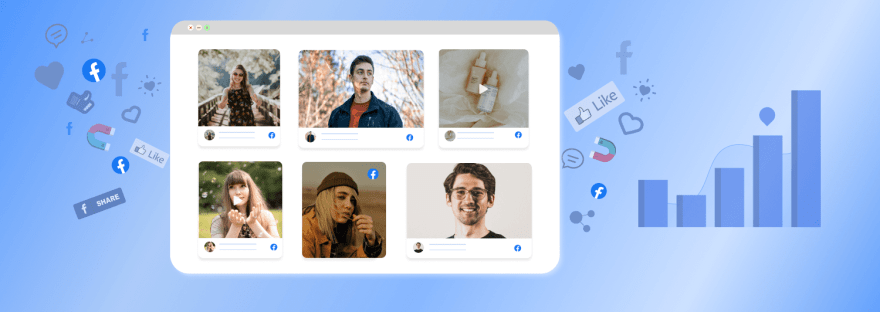
Facebook has become one of the world’s most popular social media platforms in the last decade.
With over 2.8 billion monthly users, it has become an important tool for businesses wanting to elevate their online presence and engage with customers.
However, with so much content generated on the platform daily, it can be challenging for businesses to stand out and drive engagement. This is where Facebook aggregation comes in.
What is Facebook Aggregation?
Facebook aggregation collects and displays content from multiple pages in one place. This can include posts, comments, photos, and videos.
By aggregating content from multiple pages, businesses can create a more comprehensive and engaging social media presence that keeps their audience interested.
Understanding Facebook Aggregation
Aggregation on Facebook involves consolidating various types of content, services and features into one centralized platform. This strategy seamlessly integrates different aspects of online life into one unified user experience. The power of this aggregation strategy can be seen in several ways:
- Diverse Content Types – Facebook doesn’t limit itself to a single content type. It combines an eclectic mix of text posts, images, videos, links, events, and more. This diversity lets users access a wide range of information without switching between apps or websites.
- Third-party Integration – Facebook is not an isolated island; it’s a bridge to the broader internet. It offers seamless integration with external websites, applications, and services. You can watch YouTube videos, read news articles, or play games without leaving the Facebook ecosystem. Mark Zuckerberg said, “We’re focused on developing and building the next mighty computing platform that will come after mobile, and it will take a long time.” This forward-thinking approach has kept Facebook at the forefront of technological evolution.
- Personalization – Facebook’s aggregation strategy allows for extensive personalization. The platform tailors content to individual users’ preferences and behaviors. The News Feed, for instance, is personalized to show you the most relevant content. Facebook’s COO, Sheryl Sandberg, said, “People don’t want to be spammed. They want to see updates from the people they care about and the businesses they care about.”
Also read – Real-Time Content Updates In Facebook Aggregation
What makes Facebook Aggregation Great for Businesses?
Facebook aggregation is the real deal. Brands and businesses can amplify their game through it, and in this section, we will show you what exactly it brings to the table.
1. Increased Engagement
Facebook aggregation significantly boosts user engagement. Businesses can keep their audience interested by showing content from multiple sources.
For example, a HubSpot study found that posts with images receive 2.3 times more engagement than text-only posts.
This means content diversity through aggregation is key to keeping your audience engaged and active. To understand it more read our Facebook aggregator guide.
2. Better Brand Awareness
Facebook aggregation can be a game-changer for brand awareness. By curating and displaying content from different pages, businesses can create a more comprehensive online presence that showcases their brand and values.
This helps attract new customers and fosters loyalty among existing ones. An online presence is paramount for building brand identity and recognition.
3. Improved Customer Relationships
Facebook aggregation can enhance customer relationships by displaying user-generated content. When businesses feature customer reviews and testimonials or photos, they demonstrate that they value their customers’ opinions and experiences.
This fosters trust and a sense of community among customers. In the words of Jeff Bezos, “If you don’t satisfy your customers, they might each tell six friends. If you make customers unhappy online, they can each tell 6,000 friends.”
4. Increased Traffic
Aggregating content can also drive more traffic to a business’s website. By including website links in the aggregated content, brands & businesses can attract more visitors and improve their search engine rankings.
This is especially important in the digital marketing era, where website traffic is closely tied to business success.
Also read – Future Of Facebook Aggregation
Examples of Effective Facebook Aggregation
By aggregating user-generated content and curating diverse content sources, businesses can create an online presence that resonates with their audience and turns them into active participants and brand advocates.
#1. Starbucks – Building a Community of Coffee Lovers
Starbucks, a global coffeehouse chain, is known for its passionate, loyal customer base. They’ve harnessed Facebook aggregation’s power on their page by creating a “Fan Photos” section.

This section is a hub for user-generated content, showcasing photos of customers enjoying Starbucks products. This provides a sense of validation and recognition for the customers featured and engenders a community spirit.
Customers are encouraged to share their photos, and in doing so, they become brand ambassadors. Starbucks understands that its customers are a vital part of their brand story.
By aggregating customer-created content, Starbucks reinforces the idea that its brand is not just about coffee; it’s about the experiences and connections coffee brings.
This approach fosters engagement, bringing the brand to life through the eyes of its most ardent supporters.
#2. National Geographic – Fostering a Nature Enthusiast Community
With its rich history of documenting the wonders of the natural world, National Geographic has masterfully employed a Facebook aggregator to engage its audience.

Their “Your Shot” section on Facebook is a testament to this strategy. This section aggregates user-generated photos of nature and wildlife, aligning perfectly with the brand’s values and identity.
By inviting their community to contribute, National Geographic builds a sense of belonging among nature enthusiasts and curates exceptional content.
Users who see their content featured on National Geographic’s page feel a strong sense of accomplishment and recognition.
This not only boosts engagement but also strengthens the brand’s authority in nature and wildlife documentation.
It’s a brilliant example of how Facebook feed aggregation can turn a brand’s audience into active participants, contributors, and loyal followers.
#3. Coca-Cola – Multifaceted Brand Presentation
Coca-Cola, a globally recognized beverage brand, leverages Facebook aggregation to enhance brand awareness and engagement.
Their “Coca-Cola Journey” section is a diverse platform that presents a broad range of content related to their brand and values.
This includes articles, videos, and user-generated content, creating a multifaceted brand presentation.
By curating content from various sources, Coca-Cola presents itself as more than just a beverage company. It positions itself as a brand that is deeply intertwined with culture, happiness, and experiences.
Users who visit the “Coca-Cola Journey” section get a comprehensive view of the brand’s history, values, and global impact.
This multifaceted approach enhances brand awareness and builds a loyal following of customers and fans.
By aggregating content that aligns with its brand identity, Coca-Cola keeps its audience actively engaged and connected to its brand story.
Also read – Customization Facebook Aggregation
Wrapping Up!
Facebook aggregation is a powerful tool for businesses & brands looking to enhance & boost their online presence and engage with customers.
By collecting and displaying content from multiple Facebook pages, businesses can create a more comprehensive, engaging social media presence that keeps their audience interested.
With the right approach, businesses can use Facebook aggregation to increase engagement, improve brand awareness, and build better customer relationships.

 Social Widget