
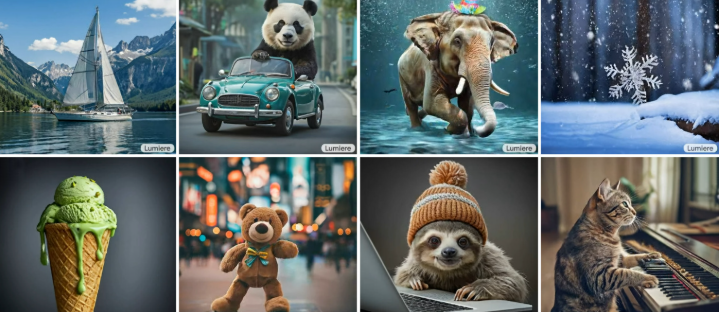
Artificial intelligence is no longer just a buzzword—it’s a creative force that’s transforming the world of visual content. From hyper-realistic avatars to surreal dreamscapes, AI-generated videos are pushing the boundaries of storytelling, marketing, and art. What once took teams of editors, designers, and videographers can now be achieved with a few clicks and clever prompts.
But not all AI videos are created equal. Some stand out so much that they make you stop, stare, and wonder: How is this even possible?
Let’s explore 5 jaw-dropping AI-generated videos and unpack the technology and tools that brought them to life.
1. The “Will Smith Eating Spaghetti” Video
Why it’s mind-blowing:
This video, which went viral on social media, features a hyper-surreal version of actor Will Smith awkwardly eating spaghetti. It’s strange, hilarious, and slightly creepy—perfect meme fuel. But what’s amazing is how AI stitched it together from scratch.
How it was made:
This video was created using a combination of Runway’s Gen-2 and Stable Diffusion. Here’s the breakdown:
- A prompt like “Will Smith eating spaghetti” was fed into a text-to-video model.
- AI-generated frames of Will Smith based on training data, then interpolated between them to simulate motion.
- The result: a glitchy, dreamlike video that’s oddly mesmerizing.
While it’s not photorealistic, it perfectly showcases how AI can generate original, moving visuals from pure text—no actors, no cameras, just data.
2. Nike’s “Future Athletes” AI Ad Campaign
Why it’s mind-blowing:
This campaign features futuristic athletes training in sci-fi cities, performing gravity-defying stunts, and interacting with robotic coaches. It looks like something straight out of a Marvel movie, yet it was generated almost entirely by AI.
How it was made:
- Tagshop AI and Synthesia were used to generate avatars of athletes in branded gear.
- Backgrounds were created with MidJourney and animated using Kaiber and Runway.
- Post-processing was handled by Adobe Premiere + AI plugins for realism.
This campaign is a perfect example of how major brands are embracing AI for large-scale, cinematic content, without Hollywood budgets.
3. “Pepperoni Hug Spot” – The AI Pizza Commercial
Why it’s mind-blowing:
This fake commercial for a fictional pizza place named Pepperoni Hug Spot was written, voiced, and animated entirely by AI—and it’s hilariously bizarre.
The video features unsettling deepfake-style smiles, oddly phrased slogans like “Cheese. Meat. Good.” and robotic voices saying things like “Our chefs are doing pizza with heart.”
How it was made:
- Script: Generated using ChatGPT with a prompt like “Write a 30-second pizza commercial.”
- Voiceovers: Created with ElevenLabs for the robotic yet emotional tone.
- Visuals: Produced using Runway’s Gen-2 and Synthesia avatars.
- Editing: Compiled with stock music and subtle AI-based filters to enhance weirdness.
The video went viral not just for its humor, but because it showed how end-to-end video creation can be automated in minutes using AI tools.
4. AI Music Videos by Grimes and Holly Herndon
Why it’s mind-blowing:
Musicians like Grimes and Holly Herndon are blending AI with art in groundbreaking ways. Their music videos feature AI-generated visuals, deepfakes, and vocals—all crafted with minimal human input.
How it was made:
- Grimes used her AI voice model (GrimesAI-1) to let fans create their own tracks with her voice.
- For her videos, she used Kaiber and Deforum to generate surreal landscapes that evolve with the beat.
- Holly Herndon’s AI clone “Holly+” generates harmonized vocals and visual interpretations in real-time using machine learning.
These artists are redefining what it means to “collaborate”—not with other humans, but with algorithms. The result is haunting, beautiful, and deeply original.
5. The Arcads AI Avatar Campaign for E-commerce
Why it’s mind-blowing:
Arcads, a rising platform for AI video creation, powered a full-fledged e-commerce campaign using AI avatars modeled after real influencers. These avatars showcased products, delivered testimonials, and interacted with customers, without filming a single real person.
How it was made:
- Avatar Creation: Avatars were generated using Arcads’ proprietary engine that uses facial modeling + voice synthesis.
- Scripting: Product video scripts were written using GPT-powered copy generation.
- Video Output: Scenes were rendered with customizable templates and voices using TTS + lip-sync models.
- Personalization: AI allowed for versioning across hundreds of SKUs and platforms in different languages.
This campaign highlighted a key trend: using AI not just for content creation, but for scalable personalization in retail marketing. Brands can now create influencer-style videos for thousands of products, 24/7, with no studio.
What These Videos Teach Us
These examples may seem wildly different—comedy, music, ads—but they all share a few key ideas:
- Text-to-video models are maturing: Tools like Runway, Pika Labs, and Sora are making it easier than ever to animate ideas straight from prompts.
- AI avatars are replacing traditional influencers: Platforms like Tagshop, Arcads, Synthesia, and D-ID let brands clone voices and faces with astonishing realism.
- Scriptwriting + voice = a full narrative: ChatGPT + ElevenLabs = complete control over tone, humor, pacing, and messaging.
- AI removes creative bottlenecks: No cameras, actors, or editors required—just imagination and the right stack of tools.
The Future: From Hype to Utility
We’re only scratching the surface of what’s possible with AI-generated video. Soon, anyone could:
- Create entire YouTube channels using AI hosts.
- Build personalized video responses at scale for customer service.
- Generate training videos, product explainers, or music videos—all without cameras or studios.
And as tools become more intuitive, you won’t need to be a tech genius or filmmaker to compete with top-tier agencies.
Final Thoughts
AI-generated videos are no longer just futuristic experiments—they’re powerful storytelling tools already disrupting entertainment, advertising, and content creation.
Whether it’s a hilarious deepfake ad like Pepperoni Hug Spot or an ultra-slick Nike campaign built with digital athletes, the future of video belongs to those who know how to speak the language of AI.
And the best part? Anyone can learn it.
All you need is an idea, the right tools, and maybe a prompt like:
“A flying cat DJ in a neon Tokyo nightclub, shot in cinematic style, narrated by Morgan Freeman.”
With AI, even that video can be real.

 Social Widget